Why Won't Anything Grow in Your Red Clay Yard? Here's What Actually Works
QUICK ANSWER: North Carolina red clay resists plant growth because its particles pack so tightly that water, air, and roots all struggle to move through it, and because the soil under most Triangle homes runs naturally acidic and short on the nutrients plants need. Sand and peat moss usually make that worse, not better. What actually works is tilling in composted organic material, correcting pH based on a real soil test, staying off the ground while it's wet, and choosing plants built for heavy soil instead of fighting it. Get that right, and clay turns into some of the most nutrient-holding soil you can landscape in.
You've planted that same corner of the yard twice now. The shrubs looked healthy going in, the bed got watered on schedule, and by midsummer the leaves had gone yellow and the roots never spread past the size of the nursery pot. A few feet away, the grass sits patchy and thin no matter how much you seed it. Easy to blame the plants, or the weather, or bad luck. Almost every time, the real answer is under your boots.
Red clay is the default soil across Garner, Raleigh, and the rest of the Triangle, and it behaves in ways that catch people off guard, especially anyone who gardened somewhere with looser, sandier ground before moving here. Clay is not a lost cause, though. It holds nutrients better than almost any other soil type once the structure gets corrected. The real work is figuring out what's actually happening underground instead of replacing plants over and over and hoping the next batch does better.
What's Actually Going On Underground
Clay particles are microscopic and flat, closer in shape to tiny plates than the rounded grains you picture with sand. Packed together, those plates stack tight with almost no room between them. Roots that would push right through loose, crumbly soil hit a wall instead, and water that should drain downward pools on top or creeps through so slowly it drowns roots before it ever clears.
Most of the native subsoil across the piedmont formed under heavy rainfall and warm temperatures, a combination that leaches nutrients out of the upper soil over time and leaves a dense, acidic clay layer behind. In plain terms, the ground under a typical Triangle yard didn't turn difficult by accident. It took a very long time to become this way, and grading or building on a lot often exposes that raw subsoil right where you're trying to plant.
Two separate problems usually stack on each other here. One is structure: how tightly the particles pack, and how little room is left for air, water, and roots. The other is chemistry: the soil's natural pH and nutrient balance, which in Triangle clay commonly tests on the acidic side, often below what most lawns, vegetables, and ornamentals actually want. Fix only one of those and ignore the other, and you get exactly the outcome a lot of well-intentioned yard work ends in: not much.
Telling Clay Trouble From Something Else
Not every struggling plant is a soil problem. But a few patterns point straight at the ground underneath.
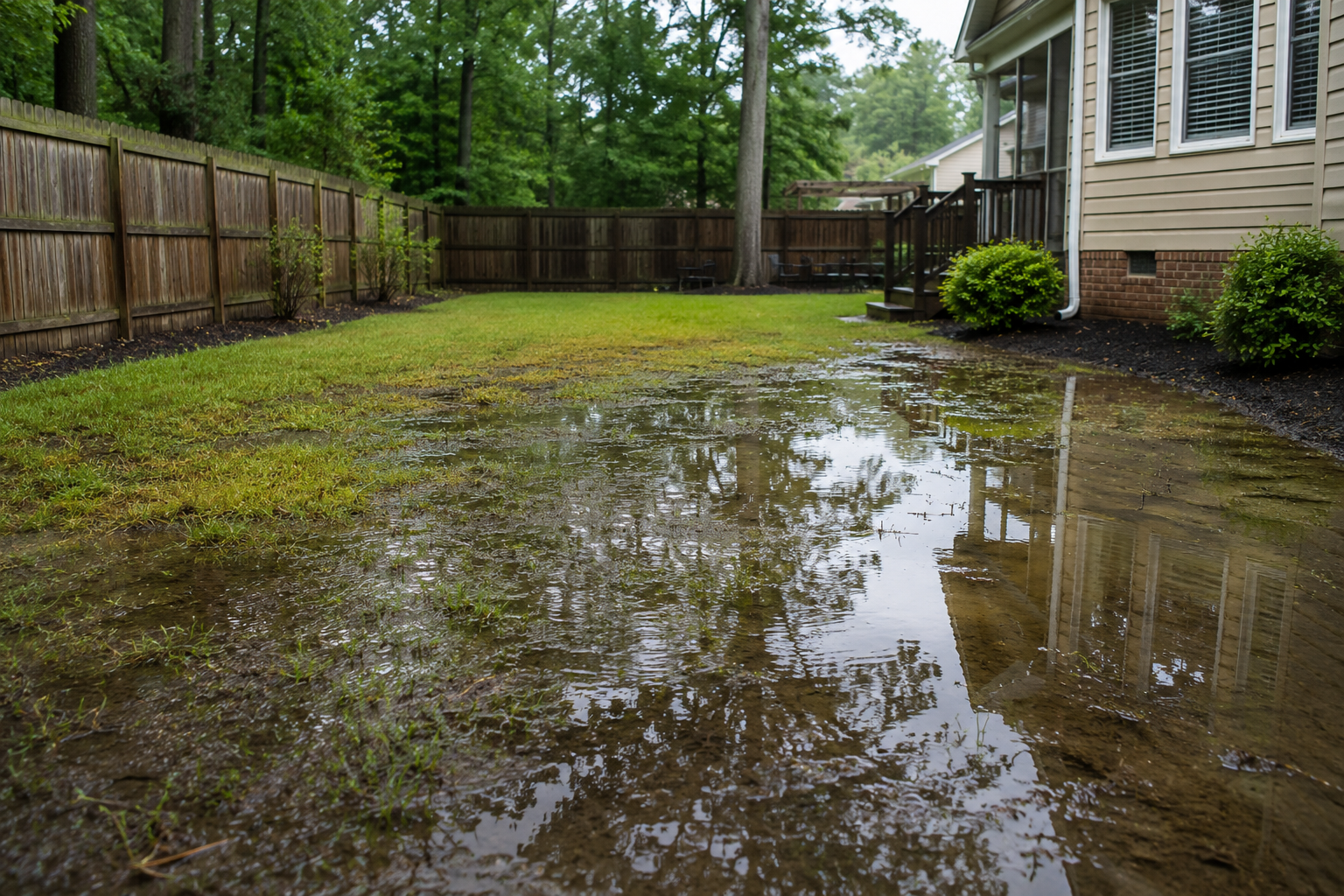
Water sitting on the surface for hours after a rain, instead of soaking in, is one of the clearest tells. So is a lawn that looks fine in spring and then thins out and yellows the moment summer heat shows up, because shallow, restricted roots can't reach the moisture and nutrients a healthy root system would find deeper down. Ground that goes brick-hard and cracked during a dry stretch, then turns to slick mud within a day of rain, is classic clay behavior, not a watering mistake. New shrubs and trees that stall out at nursery-pot size and never really push new growth after year one are usually sitting in a hole surrounded by soil their roots can't get through.
Want to check your own drainage? Dig a hole about a foot deep, fill it with water, let it drain, then fill it again and time how long the second fill takes to disappear. Three or four hours means the ground drains reasonably well. Still full after half a day, and the soil is telling you plainly that its structure needs work before anything permanent goes in the ground.
TIP: Get an actual soil test before amending anything. Guessing at pH and nutrient levels wastes money either way, correcting a problem your soil doesn't have or under-treating one it does, and a test tells you exactly how much lime or amendment your yard needs.
The Fixes That Actually Change Clay
Plenty of homeowners reach for sand first, since sand feels loose and clay feels dense. In practice this rarely helps and can make things worse. Unless sand goes in at a volume several times larger than the clay itself, which almost nobody does for a home landscape, the amount most people add just fills the gaps between clay particles and packs down into something closer to concrete than soil. Peat moss carries a similar reputation for helping but behaves a lot like clay once it's wet, soaking up water and staying saturated instead of improving drainage.
What actually works is organic matter. Well-composted material, whether that's finished compost, aged leaf mold, or finely ground pine bark, physically wedges those tightly packed clay platelets apart and creates the pore space roots and water both need. Composted is the key word there. Fresh organic material breaks down and settles after it goes in the ground, which can leave new plantings sitting lower than they started and pull nitrogen away from your plants while it decomposes.
Timing and method matter just as much as the material. Amendments need to be tilled into the existing soil, not layered on top of it, because clay left untouched under a thin layer of good topsoil will still stop roots cold the moment they reach it. Work organic matter into the top several inches, and plan to do it again as beds mature, since organic material breaks down faster in our warm climate than it does further north. One application fades in a season or two. And never work wet clay with tools or heavy equipment. Compacting saturated clay undoes progress fast and can spread fungal problems through a bed or lawn.
Grading, Rain, and the Freeze-Thaw Factor
Amending the soil solves half the equation. The other half is what happens to that soil once Triangle weather shows up in full force. This region gets heavy rainfall concentrated into intense summer storms, and clay is poorly equipped to absorb that quickly even after amendment. If the grade around a bed or lawn sends water toward it instead of away, no amount of compost fully makes up for it, because the soil is being asked to handle more water than any amended clay can hold. Getting the shape of the ground right, so water moves off planted areas instead of pooling in them, has to happen alongside soil improvement, not instead of it.
Winter adds its own wrinkle. The Triangle gets enough freeze and thaw cycles most winters that saturated clay near the surface can heave slightly as it freezes, then settle again as it thaws. Newly planted trees and shrubs are especially vulnerable to that movement in their first year, since their roots haven't anchored deep enough yet to resist it. A layer of mulch over new plantings buffers some of that temperature swing and keeps the surface from cracking and heaving as sharply.
Choosing Plants That Work With Clay Instead of Against It
Once the soil itself is in better shape, plant selection still matters. Some species tolerate heavy, slower-draining ground far better than others, and choosing accordingly saves years of frustration compared to forcing a plant that wants sharp drainage into ground that was never built for it. Native and regionally adapted species that evolved alongside piedmont clay tend to perform noticeably better than transplants bred for sandier soil somewhere else in the country. A plant matched to clay conditions, paired with soil that's been properly amended and graded, is what actually breaks the cycle of replanting the same failing corner year after year.
WARNING: Resist the urge to dig an oversized hole, backfill it with rich purchased topsoil, and drop a new tree or shrub straight into the surrounding clay. That soft pocket of loose soil acts like a bathtub sitting inside a clay basin, collecting and holding water around the roots instead of letting it move through, which drowns the very plant you were trying to help. Blend any amendment thoroughly into the surrounding native soil instead of isolating it in one soft pocket.
What Long-Term Success Actually Looks Like
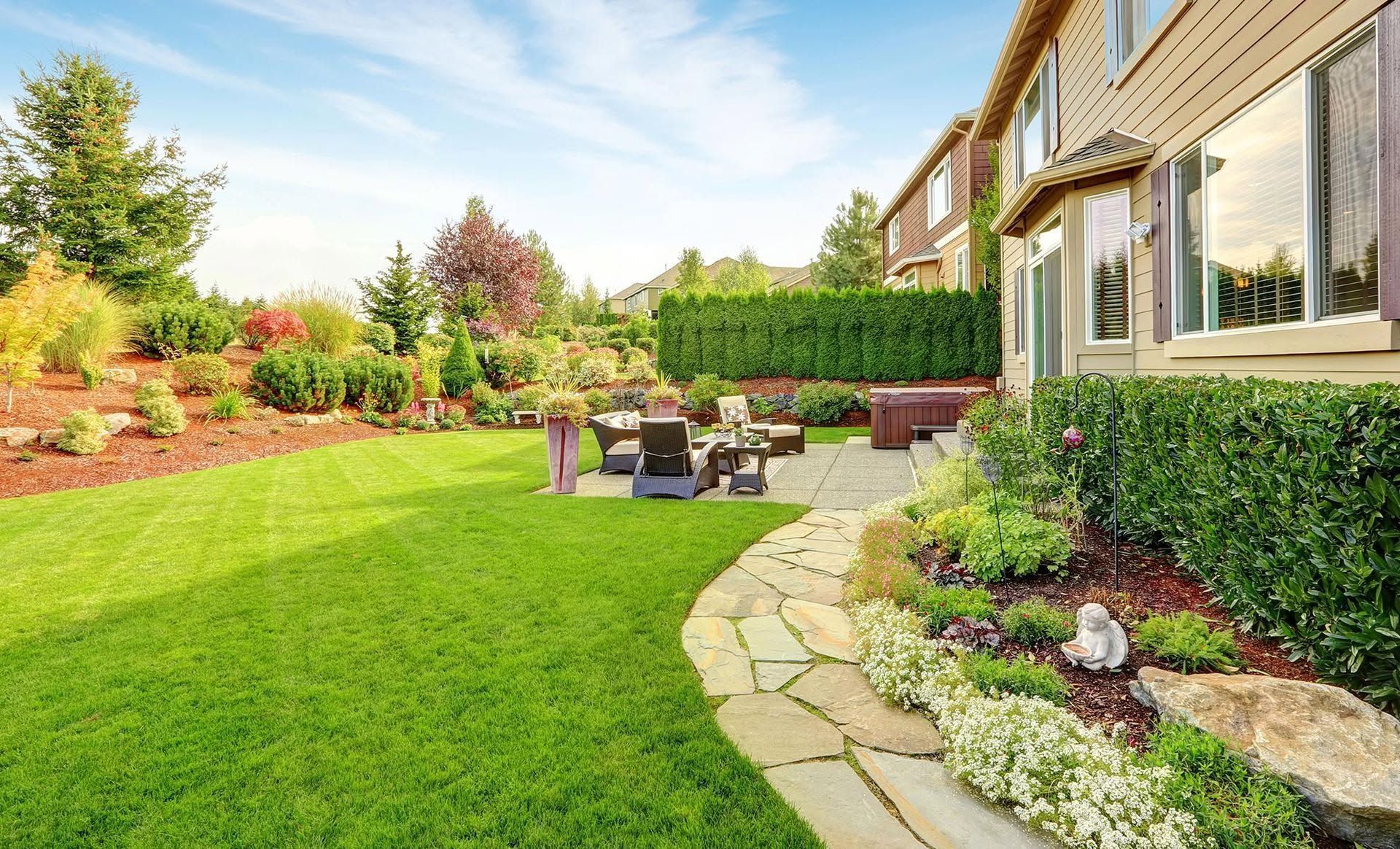
Clay that's been properly amended, graded, and planted correctly doesn't stay a problem forever. Because clay holds nutrients so well once its structure is corrected, a yard that started out difficult often ends up outperforming sandier ground nearby, which tends to drain nutrients away faster than plants can use them. The work is front-loaded. Get the structure, chemistry, grading, and plant selection right at the start, and the landscape stops fighting you every season and starts growing the way it should.
Frequently Asked Questions
Why is my yard's soil so hard and cracked in summer but sticky mud after rain?
That's classic clay behavior. The tightly packed particles hold almost no air space, so the soil swells and turns slick when saturated and shrinks and hardens as it dries out. Amending the structure with organic matter softens both extremes over time.
Is red clay actually bad soil, or just difficult?
It's good soil once the structure is corrected. Clay holds nutrients far better than sandy soil does. The difficulty is almost entirely physical, meaning compaction and poor pore space, rather than a lack of fertility once pH and nutrients are addressed.
How do I know if my soil is too acidic for what I want to plant?
A soil test is the only reliable way to know. Triangle clay commonly tests more acidic than most lawns and landscape plants prefer, and a test tells you exactly how much lime is needed instead of guessing and over- or under-correcting.
Should I till the whole yard before planting anything new?
Not necessarily. Tilling helps most in areas being newly planted or renovated, where amendments need to be worked into the top several inches. Established beds and lawns generally do better with surface amendments and regular organic matter additions than repeated tilling, which can disturb roots already in place.
Will adding a bag of topsoil on top of my clay fix drainage?
On its own, no. Topsoil layered over untouched clay creates a shallow zone of good soil sitting on top of a barrier roots still can't get through, and water can perch right at that boundary line. Any added soil needs to be blended into the existing ground, not stacked on top of it.
Can grass ever grow thick in a clay yard?
Yes, once the soil structure and pH are corrected and the right grass type is matched to the site's sun and soil conditions. Thin, patchy turf over clay is almost always a structure and fertility issue, not a sign the yard can't support a healthy lawn.
Building Healthier Landscapes From the Ground Up
Red clay does not have to determine how well a landscape performs. With more than 10 years of experience, Greenchest Landscape LLC understands the soil conditions common throughout Raleigh, NC, and the surrounding region. Improving compacted clay through proper organic amendments, balanced soil chemistry, thoughtful grading, and suitable plant choices creates healthier conditions below the surface. When these elements work together, roots can establish more successfully, moisture moves more evenly, and lawns and planting beds become easier to maintain.
Long-term results come from treating clay as a soil that needs improvement rather than something that must be completely replaced. Regular additions of organic matter can preserve better structure, while proper drainage and careful planting practices help prevent compaction and excess moisture from returning. Choosing plants suited to Piedmont conditions further reduces unnecessary stress throughout changing seasons. With the ground prepared correctly from the beginning, difficult red clay can gradually become productive, dependable soil that supports stronger growth and a more resilient landscape.