Front Yard vs. Backyard Landscaping: Where to Invest First for the Biggest Impact
You finally set aside money for the yard this year, and now you are standing in the driveway on a Saturday morning with no idea where it should go. The front looks tired from the street, the grass thin and the beds overgrown. The backyard is where you actually spend your evenings, but it is mostly mud, weeds, and a patch of shade where nothing grows. Both need attention. The budget only stretches so far. So which one wins?
Here is the answer before anything else: put your first effort into the yard that matches your single biggest goal right now. If you plan to sell within two years, the front returns the most, because buyers and appraisers form an opinion before reaching the door. If you are staying put and want to enjoy your home, the backyard pays you back every single evening you walk into it. After walking hundreds of yards across the Triangle, that one question settles the debate far more often than square footage or how bad either space looks today.
Start With Your Goal, Not the Worse Looking Yard
The instinct is to fix whatever looks roughest first. That instinct is usually wrong. A messy yard is not a high value yard, and the space that bothers you most is not always the one that gives back the most.
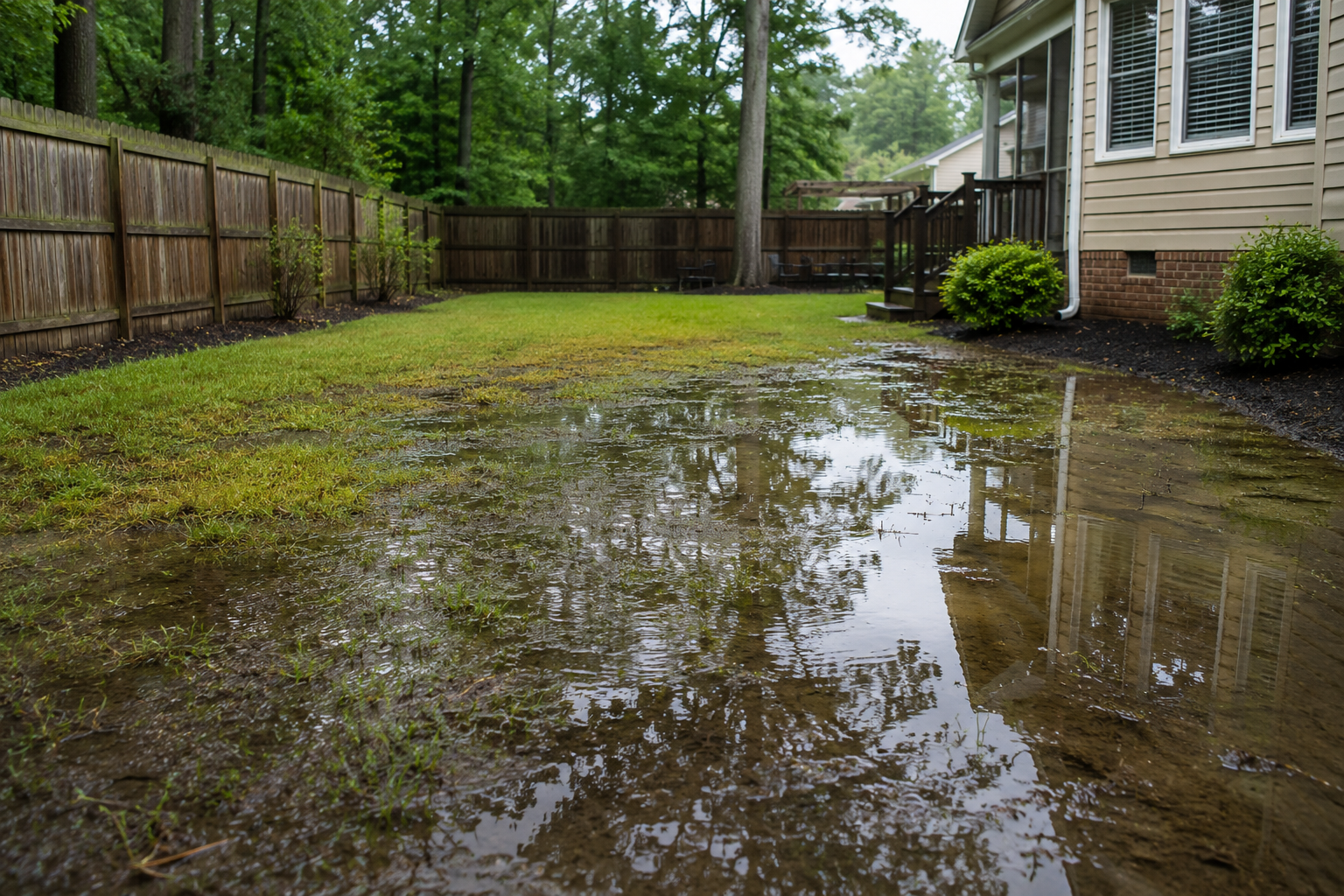
Decide what you want the money to do. Raise resale value? Improve daily life? Solve a real problem like standing water or erosion? Each goal points to a different starting line. Resale points to the front. Daily living points to the back. A drainage failure points wherever the water is pooling, because letting it sit will damage whatever you build later. Pick the goal, then the yard chooses itself.
When the Front Yard Should Win
Lead with the front when first impressions carry weight for you. Roughly the first ten seconds a person spends looking at your home happens before anyone ever steps inside, and the front yard owns that window completely.
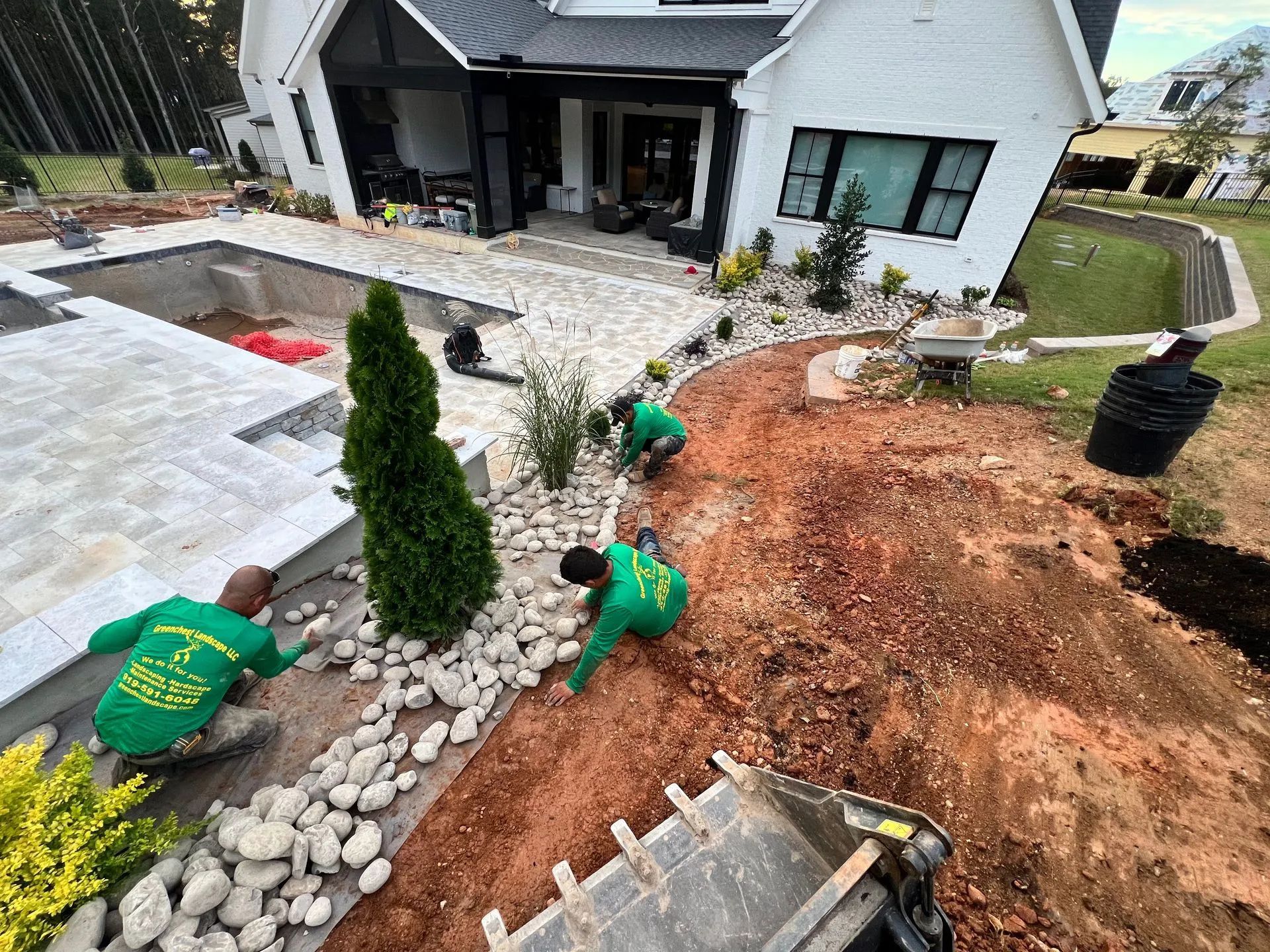
A clean front earns its keep three ways. It lifts perceived value the moment anyone pulls up. It transforms with less work than people expect, since front yards in most Raleigh neighborhoods are smaller and simpler than the back. And it protects the house itself, because healthy foundation beds and graded soil keep water moving away from your slab instead of toward it. If you are listing soon, refreshing the lawn, edging the beds, and adding a few shrubs near the entry moves the needle faster than almost anything out back.
When the Backyard Should Win
Lead with the backyard when you are staying and the space is not getting used. A yard you avoid is wasted square footage you are still paying for every month.
The back is where lifestyle lives: the patio, the fire feature, the shade you sit under in July when the humidity makes the front yard miserable. These projects rarely return full value at resale, yet hand you something the front never can, which is the reason you bought a house with a yard in the first place. We see the same story often. A family pours everything into curb appeal, then realizes a year later there is nowhere comfortable to actually sit. If your goal is living rather than selling, start where you live.
How to Split One Budget Across Both
You do not have to choose all or nothing. The smartest plan we lay out for most homeowners phases the work so neither yard gets neglected and nothing gets wasted.
Start with the foundation layer in both spaces: soil correction, drainage, and grading. These are invisible and unglamorous, yet the most important thing you will ever do, because everything you add later depends on what is underneath. Once the bones are right, send the larger share of the remaining budget toward your primary goal yard and a smaller maintenance share toward the other so it holds steady rather than sliding backward. A front yard you let go while building the back can lose a season of progress fast in our climate.
What Raleigh Yards Do Differently
Local ground rules change the entire calculation here, and the biggest one is under your feet. Raleigh sits on heavy red clay that drains slowly, holds water against roots, and turns to concrete in a dry August. A plan that works in sandy coastal soil will struggle in the Piedmont without amendment.
That clay drives the order of operations. Drainage and soil come first because water sits on clay instead of soaking through, which rots roots and feeds the fungus that thins out lawns in our humid summers. Cool season fescue greens up beautifully through spring and fall but suffers in peak heat, while warm season grasses handle July far better and go dormant tan in winter. Our long, sticky summers and mild winters mean the right plant in the right spot matters more here than in steadier climates. Pine shade, common across older Raleigh lots, acidifies soil and starves the lawn beneath it, which is why front yards thin out under those trees no matter how much seed goes down.
Mistakes That Quietly Waste Your First Move
The most expensive mistake is skipping the ground and buying plants first. It happens for an understandable reason, since plants are the fun part and drainage is not. The result is predictable though: new plants drown in clay that holds water, and you replace them within two seasons. Fix the soil, then plant.
The second common miss is matching a national plant list to a North Carolina yard. Tags at the big stores rarely account for our clay or our humidity, so homeowners install plants that look perfect in spring and melt by August. The third is treating the front and back as one project on one weekend. Each has a different job, and rushing both at once usually means doing both poorly.
Keeping Either Investment Alive
Whatever you build, protect it by season so it does not quietly undo itself. In spring, focus on bed cleanup, fresh mulch to hold moisture in clay, and a soil test before you feed anything. Through the hot months, water deeply but less often so roots chase moisture downward instead of staying shallow and weak. In fall, the cool season window is your best chance to overseed and let new grass root before winter. Once a year, walk both yards after a heavy rain and watch where water pools, because that single ten minute habit catches drainage problems before any of them wreck the work you put in.
Frequently Asked Questions
Should I landscape the front or back first to sell my house?
Lead with the front. Buyers and appraisers judge your home from the curb before stepping inside, so a clean lawn, crisp edges, and tidy entry beds return more at resale than backyard upgrades, which rarely recover full value. If you are listing soon, the front yard moves the needle faster than almost anything out back.
Why do my front yard plants keep dying in Raleigh?
Our heavy red clay holds water against roots and drains slowly, drowning plants chosen for sandier soil. Amend the bed and improve drainage before replanting, and pick varieties suited to Piedmont clay and humid summers rather than generic store tags. Plants matched to local conditions root deeper, handle our heat, and survive far longer here.
Is backyard landscaping worth it if I am not selling?
Yes, if you actually use the space. Patios, shade, and seating rarely return full resale value, yet turn unused square footage into the part of your home you enjoy daily, which is the real payoff of staying put. When you plan to live in a home for years, daily comfort outweighs resale every single time.
What should I fix before planting anything?
Drainage, grading, and soil come first every time. On Raleigh clay, water pools instead of soaking in, so plants installed before you correct the ground tend to rot within two seasons no matter how healthy the plant looked going in. Get the foundation right once, and everything you add on top simply lasts much longer.
When is the best time to plant in Raleigh?
Fall is the strongest window. Cooler air and warm soil let roots establish before winter and dodge the brutal summer heat. Early spring works as a backup, but anything planted in July struggles against our humidity and dry spells.
Dependable Landscaping That Holds Up Through Every Season
The whole decision comes down to one question: are you investing to sell or investing to live, and what is the ground underneath willing to support. That choice is sharper here than almost anywhere, because Raleigh clay, pine shade, and our humid summers punish the wrong order of work faster than a milder climate ever would. At Greenchest Landscape LLC, we have spent more than 10
years reading these exact
yards
and building plans that hold up through every season. We help homeowners across Raleigh, North Carolina put the first move where it earns the most. Walk your yard with us and let us map the right order before you spend a thing.